
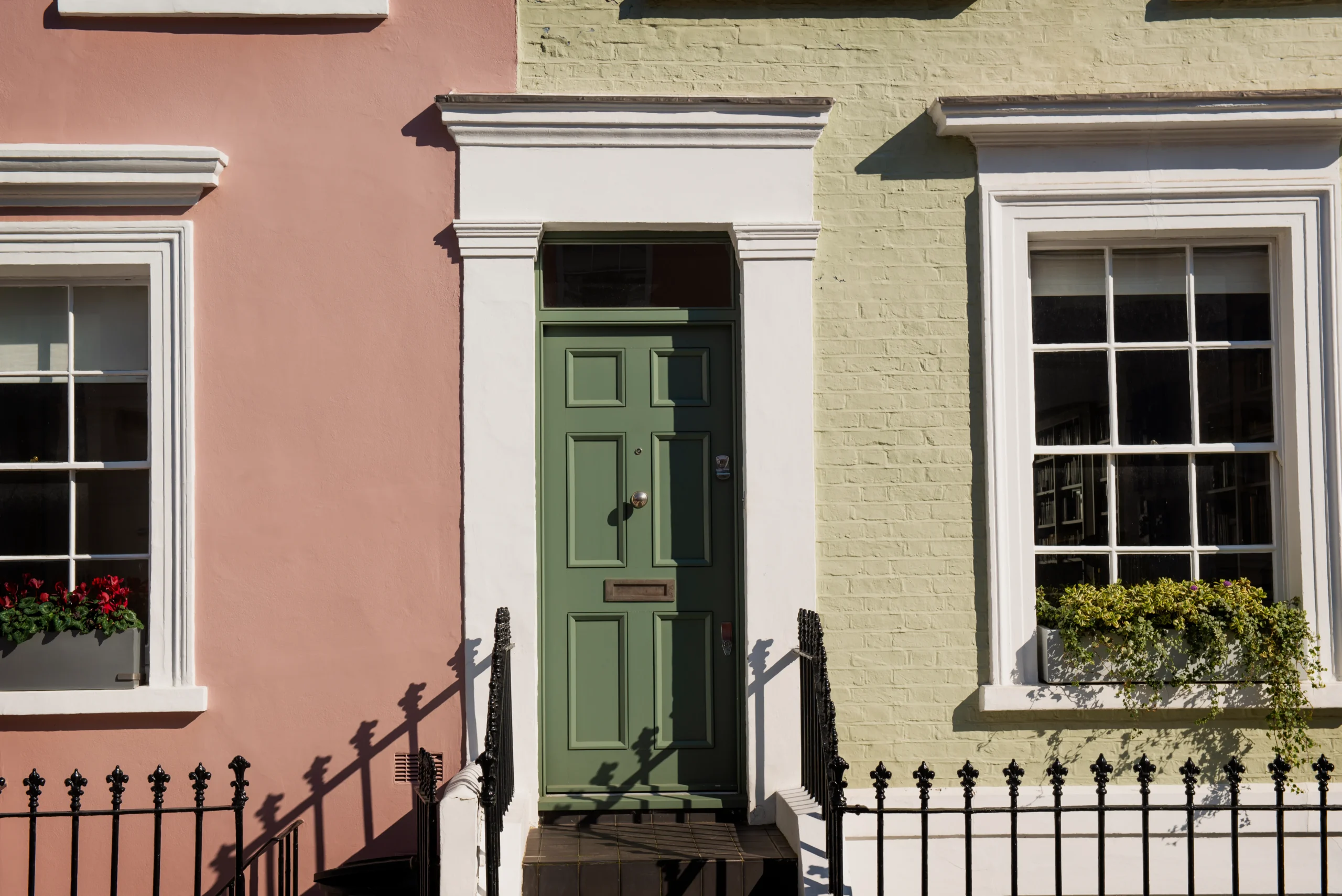
Getting the outside of your home painted in London is not as simple as picking a colour. The weather is unpredictable, properties vary from Victorian terraces to modern detached homes, and what a job costs depends on far more than square footage. This guide gives you a clear, honest picture before you start calling decorators.
Exterior House Painting London — What to Know Before You Start
Spring and summer are the most reliable seasons, costs vary widely based on your property and its condition, and preparation matters more than the paint itself.
- When to book: April through September works best
- Time on site: Most homes take two days to a week
- What affects cost most: Surface condition, access, scaffolding, and paint system
- Common surfaces: Render, brick, pebbledash, timber fascias and soffits
Any price you see online is an estimate. The only figure that matters is what a decorator gives you after seeing your property in person.
Exterior House Painting London Cost Guide
Pricing Disclaimer: The ranges below are general guidance only and should not be treated as quotes. Actual costs depend on size, surface condition, access, scaffolding, repair work, and materials. Always get a written quote following an in-person visit before committing to any work.
| Property Type | Estimated Cost Range | Typical Time on Site |
| Two-bedroom terraced house | Lower end of market | 2–3 days |
| Semi-detached house | Mid range | 3–4 days |
| Detached house | Mid to upper range | 4–7 days |
| Render-only repaint | Varies by size | 1–3 days |
| Victorian terraced house | Mid range | 3–5 days |
Scaffolding on awkward properties, heavy repair work, specialist coatings, and premium paint brands all push costs higher. Good surface condition and straightforward access keep them lower.
Best Time for Exterior House Painting in London
Timing your project well makes a genuine difference to how long the paint lasts.
- April and May are a reliable window. Winter is behind you, temperatures are rising, and dry spells become easier to find. Decorators fill their books fast from this point — getting in early pays off
- June through August offers the most consistent conditions. Longer dry spells, generous daylight, and warmth that helps coats cure properly. The downside is that good exterior painters in London are at peak demand — expect to wait if you leave it late.
- September and early October can still work, particularly the first half of September. Deeper into autumn, shorter days and rising damp start causing problems.
- November through March is difficult. Frost can damage fresh coats, cold slows drying, and persistent damp means surfaces rarely dry out enough to paint over properly.
- Many exterior paints perform best in mild, dry conditions. Always check the manufacturer’s guidance for minimum temperature requirements on whatever system is being used.
What Drives Exterior House Painting Costs in London?
- Property size — more wall area means more materials and more time
- Surface condition — widespread cracking, blown render, or active damp needs significant work before painting begins
- Brick or render — each requires different preparation and often different products
- Scaffolding — commonly needed for multi-storey work where ladders alone cannot safely cover the elevation
- Preparation — cleaning, filling, and priming are not optional. They are what makes paint last
- Paint specification — products like Dulux Weathershield, Sandtex, and Farrow & Ball exterior ranges cost more but generally perform better over time
- Access complications — bay windows, tight alleyways, and side returns all add time and cost
How a Professional Exterior Painting Job Should Work
- Inspection first. A decorator walks the full exterior and identifies cracks, damp, failing paint, and soft render before anything is priced or started.
- Thorough cleaning. Algae, moss, dirt, and chalky old paint prevent new coats from bonding. Pressure washing or hand scrubbing is not optional — it is the foundation everything else sits on.
- Repairs and stabilisation. Cracks get filled, loose render is re-bonded, and friable surfaces get a stabilising treatment before any paint goes on.
- Priming. Bare or porous masonry benefits from a primer coat. It improves adhesion and often reduces the amount of topcoat needed.
- Finish coats. Two coats of a suitable exterior masonry paint or weatherproof coating, applied with manufacturer-specified drying time between them.
- Final check. Window reveals, sills, fascias, and edges are reviewed, touched up, and the site is left clean.
Common Mistakes That Cost London Homeowners More Later
- Choosing the lowest quote without asking what preparation is actually included
- Letting work proceed in borderline weather because a deadline feels urgent
- Painting over a damp problem rather than fixing it — the paint fails and the damp gets worse
- Using a product not designed for exterior masonry because it was cheaper or already available
- Ignoring fine cracks — water finds its way in and damage compounds over time
How to Choose Exterior Painters in London
- Check insurance first. Public liability cover is non-negotiable. Ask for it and do not proceed without seeing it.
- Get everything in writing. A proper written quote breaks down labour, materials, preparation, and exclusions. Verbal agreements are not worth much when something goes wrong.
- Look at reviews for exterior work specifically. Interior and exterior decorating are different disciplines. Strong reviews for inside work do not automatically transfer outside.
- Understand the guarantee. Reputable exterior painters in London offer a workmanship guarantee. Ask what it covers and for how long.
- Ask about the paint system. A professional should explain exactly what products they plan to use and why those suit your surface type.
Why Homeowners Choose Decoration Touch for Exterior House Painting in London
Decoration Touch is a London-based decorating company working across a range of exterior projects — painted render, brick, pebbledash, timber, and full external refurbishments on properties of different ages and types.
Every job starts with a site visit and a written quote setting out exactly what will be done. Paint systems are chosen for the specific surface and condition of each property, with brands like Dulux Weathershield and Sandtex used where they are the right fit. For exterior decorating in London carried out properly and honestly, visit decorationtouch.co.uk.
Final Thoughts on Exterior House Painting in London
Good results come from doing the unglamorous things properly — cleaning the surface, making repairs, priming correctly, and giving coats time to cure. The paint is almost secondary to what happens underneath it.
Book during the warmer months, get a written quote from someone who has seen your property, and be cautious of any offer that skips over what preparation will actually be done.For a no-obligation quote from an experienced London team, visit decorationtouch
Disclaimer :All cost information in this article is indicative only. Prices vary based on individual property requirements, access, condition, and specification. Do not rely on any figure here as a formal estimate. Always obtain a written quote from a qualified professional following an in-person assessment.
Frequently asked questions
How regularly does exterior paintwork need attention?
It depends on the surface, paint system, and how exposed the elevation is. There is no fixed rule — a good decorator can give you a realistic expectation for your specific property.
How long will exterior paint last?
Exterior coatings can last several years with proper preparation and a quality product. Poor preparation or an unsuitable product can mean failure much sooner. Surface type and exposure both play a part.
Can outside house painting be done in winter?
Most decorators will advise waiting. Frost, damp, and cold all interfere with how paint adheres and dries. Mild dry spells can occasionally be used, but the risk is higher than in warmer months.
Which paint works best on render in London?
Products like Dulux Weathershield Smooth and Sandtex Fine Textured are widely used on render. The best choice depends on your render type and condition — your decorator should advise after seeing it.
Will scaffolding be needed in London buildings?
Scaffolding is commonly used when multi-storey or full-elevation access is required. Whether your property needs it depends on height, layout, and scope of work — assessed during the initial visit.