
You walk into your bedroom on a grey Monday morning and notice it — a dark, spreading stain on the wall. It wasn’t there last week. Or maybe it was, and you just hoped it would go away on its own. It won’t.
Damp patches on walls are one of the most common problems homeowners face across the UK. In London especially, where older housing stock, heavy rainfall, and poor ventilation often collide, damp wall problems are practically a rite of passage.
What are damp patches on walls? Damp patches on walls are caused by excess moisture trapped inside wall surfaces due to leaks, condensation, or structural issues.
But here’s the thing — most damp problems are fixable. The sooner you understand what’s causing them, the cheaper and easier the solution becomes. Left too long, a small damp patch can turn into crumbling plaster, black mould, and costly structural repairs.
This guide covers everything: what causes damp walls, how to identify the type, and exactly how to fix damp patches — from simple DIY steps to knowing when to call a professional.
What Are Damp Patches on Walls?
A damp patch is an area on your wall where moisture has built up and become visible. It usually appears as a dark discolouration — sometimes wet to the touch, sometimes a faint stain that keeps coming back after you paint over it.
These patches can appear on internal walls, external walls, ceilings, and around windows. They often come with a musty smell, peeling paint or wallpaper, and occasionally white powdery deposits (called efflorescence) on the surface.
The visible patch is usually just the surface sign of a deeper problem — excess moisture trapped inside your wall. Understanding what causes damp walls is the only way to fix them properly.
Common Causes of Damp Walls
There is no single reason for damp wall problems. The cause depends on where the patch appears and how it behaves. Here are the most common culprits:
- Leaking gutters or downpipes: If rainwater isn’t draining properly outside your home, it can saturate the external brickwork and seep inward.
- Failed or missing pointing: The mortar between bricks can crack and erode over time, letting water pass straight through the wall.
- Bridged damp-proof course (DPC): If soil, render, or debris outside is piled higher than the damp-proof course, moisture can bypass it and rise up through the walls.
- Plumbing leaks: A slow leak behind a wall from a pipe or radiator fitting can cause persistent damp patches on walls that seem to appear out of nowhere.
- Poor ventilation: Bathrooms and kitchens produce large amounts of steam. If this isn’t vented properly, it condenses on cold walls.
- Flat roof issues: Even a small crack in the roof membrane can let in water and create damp patches on ceilings — a common issue in London flats.
Types of Damp: Rising, Penetrating, and Condensation
Not all damp is the same. Identifying the type is the first step to fixing damp walls properly.
Rising Damp This is groundwater moving upward through the base of your walls. It typically appears as a tide mark about one metre from the floor and often feels spongy at the base. Rising damp is usually caused by a failed or absent damp-proof course. It’s more common in older Victorian and Edwardian properties across London.
Penetrating Damp Water enters horizontally through external walls, the roof, or windows. The damp patch often appears after heavy rain and is typically on an outward-facing wall. You might notice it particularly after a wet winter in areas like Hampstead or Acton, where older terraced housing is widespread.
Condensation Damp This is the most common moisture in walls cause in UK homes. Warm, moist air hits cold surfaces and turns to water. You will often see it on windows, in bathroom corners, and on north-facing walls. It frequently leads to black mould growth if left untreated.
How to Identify the Cause of Your Damp Problem
Before you spend money fixing the wrong thing, take a moment to observe:
- Does the patch appear after it rains? — Likely penetrating damp or a roof/gutter issue.
- Is it low on the wall, near the floor? — Could be rising damp.
- Does it appear in winter but disappear in summer? — Almost certainly condensation.
- Is it near a radiator or sink? — Check for a plumbing leak first.
- Does it smell musty even when dry? — Moisture has likely been sitting inside the wall for some time.
- Is the wall bubbling or is the plaster soft? — The damp has already caused structural damage.
If you are unsure, a professional damp survey will give you a clear diagnosis. Many damp proofing London specialists offer free initial assessments.
How to Fix Damp Patches on Walls — Step by Step
Once you know the cause, here is how to fix damp walls properly
- Fix the source first: No decorating fix will hold if the moisture source is still active. Repair leaking gutters, seal cracks, fix the roof, or call a plumber before touching the wall surface.
- Let the wall dry out: After fixing the source, allow the wall to dry fully. This can take weeks in older properties. Use a dehumidifier to speed things up.
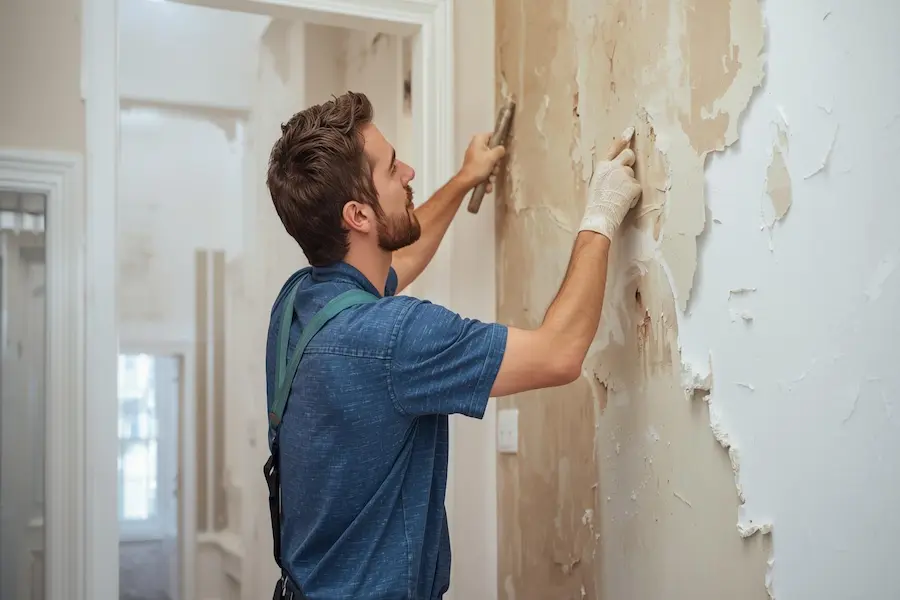
- Remove damaged plaster: If the plaster has crumbled or gone soft, it needs to be cut back to a solid edge. Patchy repairs over damaged plaster will fail. Our plastering services team can handle this professionally.
- Apply a damp-resistant primer: Use a damp-seal primer or stain block on the affected area before redecorating. This stops the stain bleeding through new paint.
- Re-plaster and redecorate: Once the primer is dry, re-plaster if needed, then repaint. Use breathable masonry paint on external walls and a quality emulsion for interiors. Our painting and decorating services in London cover everything from single rooms to full exterior repaints.
- Improve ventilation: For condensation damp, install extractor fans in bathrooms and kitchens. Keep trickle vents open. Avoid drying clothes indoors without ventilation.
When to Call a Professional for Damp Wall Problems
Some damp problems are genuinely DIY-friendly. A single condensation patch in a bathroom can often be sorted with better ventilation and a tin of damp-seal paint. But there are times when you should call in a professional:
- Damp patches on walls keep returning despite repeated repainting
- Black mould is spreading across multiple walls or the ceiling
- The plaster is soft, crumbling, or bulging
- The damp is at the base of the wall and you suspect rising damp
- You have had a wet winter and the external brickwork looks saturated
- The problem is in a rented property — landlords have a legal duty to address damp under the Homes (Fitness for Human Habitation) Act 2018
- You are about to redecorate and want the walls assessed before you start
Getting a professional diagnosis before decorating is especially important. Painting over unresolved damp wall problems is one of the most common and costly mistakes homeowners make.
Tips to Prevent Damp Patches on Walls
Prevention is always better than a costly repair. Here are practical steps any homeowner can take:
- Clean your gutters twice a year — blocked gutters are a leading cause of damp patches on walls in UK homes
- Check external pointing every few years, especially after harsh winters
- Keep extractor fans running for at least 15 minutes after cooking or showering
- Open windows where possible, particularly in bedrooms and kitchens
- Move furniture slightly away from exterior walls to allow air to circulate
- Check pipes under sinks and behind toilets regularly for small leaks
- Use a hygrometer to monitor indoor humidity — aim to keep it below 60%
- Insulate cold walls or pipes to reduce moisture in walls during winter months
Frequently Asked Questions
What causes damp patches on walls?
Damp patches on walls are most commonly caused by penetrating damp (rainwater entering through cracks or failed pointing), rising damp (groundwater moving up through the wall base), or condensation (warm moist air settling on cold surfaces). Plumbing leaks and blocked gutters are also frequent culprits in UK homes.
Can damp walls be fixed permanently?
Yes — but only if the root cause is fixed first. Treating just the surface with paint or plaster will not last. Once the source of moisture is resolved and the wall has fully dried out, professional replastering and redecorating will give you a lasting result.
Is damp dangerous for health?
Yes. Damp walls encourage black mould growth, which releases spores into the air. This can trigger or worsen respiratory conditions such as asthma, allergies, and bronchitis. Children, elderly people, and anyone with a weakened immune system are particularly vulnerable. The NHS advises treating damp and mould promptly.
How long does it take to fix damp patches on walls?
It depends on the cause and severity. A simple condensation fix can take a few days. Penetrating damp repairs involving repointing and replastering may take one to two weeks. Rising damp treatment with a new DPC injection typically takes several days, followed by weeks of drying time before redecorating.
Is damp proofing in London expensive?
Damp proofing London costs vary widely — from a few hundred pounds for minor condensation issues to several thousand for full rising damp treatment. Getting a proper survey first avoids paying for the wrong treatment. Many London specialists, including our team at Decoration Touch, offer free initial assessmen
Ready to Sort Your Damp Problem for Good?
Damp patches on walls will not fix themselves — but with the right diagnosis and the right repair, most damp wall problems are completely solvable. The key is acting early, addressing the root cause, and redecorating properly once the moisture in walls is genuinely resolved.
At Decoration Touch, we have helped homeowners across London — from period properties in Hampstead to modern flats in Acton — fix damp wall problems and restore their homes to their best. Whether you need plastering repairs, damp proofing advice, or a full redecoration once the issue is sorted, our team is ready to help.
Get in touch with Decoration Touch today for a free, no-obligation chat. Honest assessment, clear plan — no upselling, no jargon